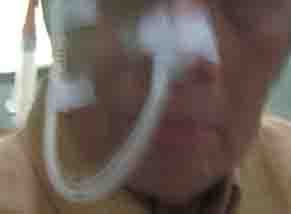
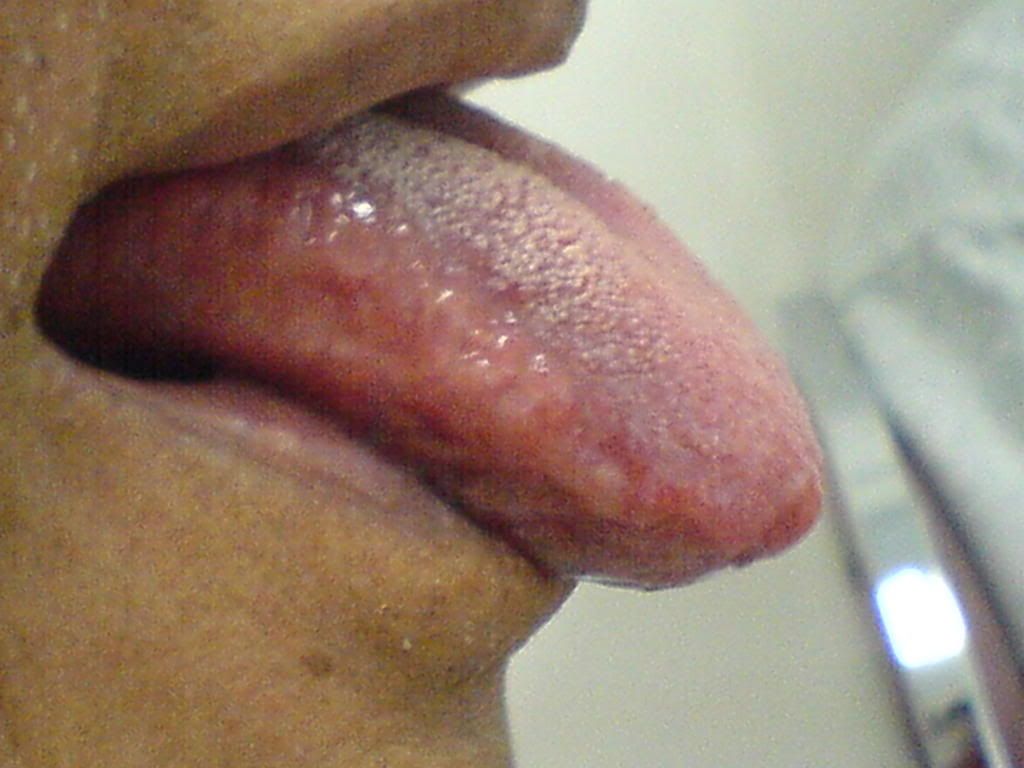
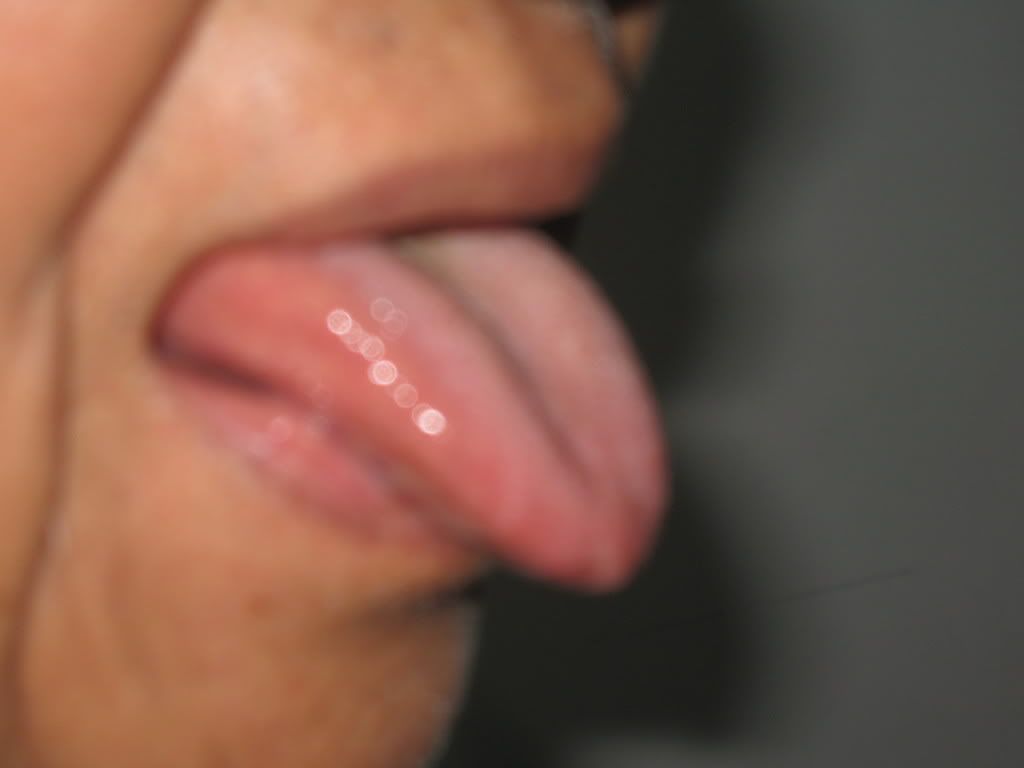
This photo was taken from Intensive Care Unit. October 14, 2007
Lying in bed is my colleague, hospitalized since Friday, October 12, 2007 .
Symptoms:
He complained fever and body aches on Sunday , October 7, 2007.
On Wednesday, the rash appeared, He just noticed that his son got varicella about two weeks earlier.
Friday morning, his wife found he was delier. His wife brought him to the hospital. During first hour, the convulsion happened!!
We admitted him to the Intensive Care Unit,
Brain Scan: normal, electrolyte : normal
Consciousness status : somnolent
Convulsion still occur sometimes.
Regiment: medication for viral become the first line.
I have been using ILIB (Intravascular Laser Irradiation on
Blood)
It will be done 10 times, everyday for 10 days
Result:
After 1st administration, the convulsion diminished,
eye contact has become more adequate.
I will write reports on the progress.
The story:
At friday afternoon, I found cyanotic at all of his nails. He bound to the bed, because couldn't lying down quietly. So, I decided to give him ILIB with the dose for brain injured.
The laser (ILIB) began on Saturday morning. opening power for 50 %, administered for 1 hour. In the evening the nurse reported the the convulsion diminished.
Sunday morning , it was eye contact, but not adequatly. The second laser with the same dose. Nurse reported inthe evening, the fever just 38 degree.On monday morning contact is good response to questions.Also the same dose given. Evening report: good condition !! Alert !
The followings are some references on chickenpox in adults:
Facts About Chickenpox for Adults
Chickenpox, also known as varicella, is a very contagious disease caused by the varicella-zoster virus. It is spread easily through the air by infected people when they sneeze or cough. The disease also spreads through contact with an infected person's chickenpox blisters. Because chickenpox is very contagious, it is possible for people who have never had chickenpoxnor been vaccinated against it to become infected just by being in a room with someone who has the disease. However, transient exposure is not likely to result in infection.
Symptoms of chickenpox
Early symptoms may include body aches, fever, fatigue, irritability and sore throat. A rash then appears and develops into as many as 250-500 itchy blisters over the entire body, that usually last for 5-7 days and heal with scabs. The rash may even spread into the mouth or other internal parts of the body. The illness is usually not severe, but the risk of hospitalization and
death is increased among adolescents and adults.
Symptoms appear between 10 and 21 days after exposure to the varicellazoster
virus. Persons who were vaccinated against chickenpox may sometimes develop chickenpox disease but the presentation is usually mild, with approximately 50 or fewer red bumps that rarely evolve to blisters.
Here a copy about laser for brain infarction:
The study of low level laser irradiation therapy on brain infarction with SPECT
<<中国临床神经科学 >>2000年z1期Xiao Xuechang , Jia Shaowei , Zleng Xiyuan
Objective:
Effect of rCBF and brain function on ILIB treating brain infarction will be investigated by SPECT brain perfusion imaging. Method: 3 1 patients with brain infarction, 17 patients were treated by ILIB on standard pharmaceutial treatment. SPECT brain perfusion imaging was performed before and after ILIB therapy with comparison of oneself. They were quantified with BFCR%model effect during ILIB in 14 patients were observed. Result: ILIB 30 rnme SPECT showed the improvement of rCBF and cerebral function in 14 patients with brain infarction, and in 17 patients locus were prominence than mirror regions att er ILIB therapy, both are higher singnitficant difference ( t=4.4052, P<0.0001 ), but mirror regions were not singnificant difference before and after ILIB (t=1.6995, P>0.05). BFCR%quantitative results of locus were higher mirror regions, and higher singnificant difference (t=4.5278 p<0.0001 )。 Conclusion: ILIB can improve the rCBF and cerebral function of patients with brain infarction, and provoke function of brain cells. Some new evidence was provided for ILIB treatment of cerebral ischemia