Showing posts with label osteoarthrosis genu. Show all posts

Friday, March 9, 2007

OSTEOARTHROSIS GENU- REHABILITATION MEDICINE APPROACH

Impairment, Disability, and Handicap


Other terms associated with rehabilitation include impairment, disability, and handicap. Impairment is the residual limitation resulting from disease, injury, or a congenital defect. Disability is the inability to perform some key life function.
Handicap is the interaction of a disability with the environment.

Report from my office

Mrs. Emma was sent to me with working diagnosis: bilateral knee osteoarthritis. Using rehabilitation terminology, knee osteoarthrosis (OA genu) was her impairment. No limitation to perform activity of daily living (eating, bathing, grooming, toileting), means no disability. Chief complaint: very painful when walking (Visual Analog Scale/ VAS > 6), Handicap : yes.

Program : Goal : pain reduction

Regiment: Diode laser, output 90mW; 60 J , 3 times, every other day

Knee support

Discussion : Low Level Laser given to reduce pain.

Another modality, such as TENS, would not be helpful if VAS for pain > 6

Knee support : to reduce weight bearing , pain reducing is the result

Resulted: mobility: minimally pain while walking after 3rd cold laser ;

no more handicap

Rehabilitation working diagnosis: Impairment : yes :OA Genu

Disability : no

Handicap : no
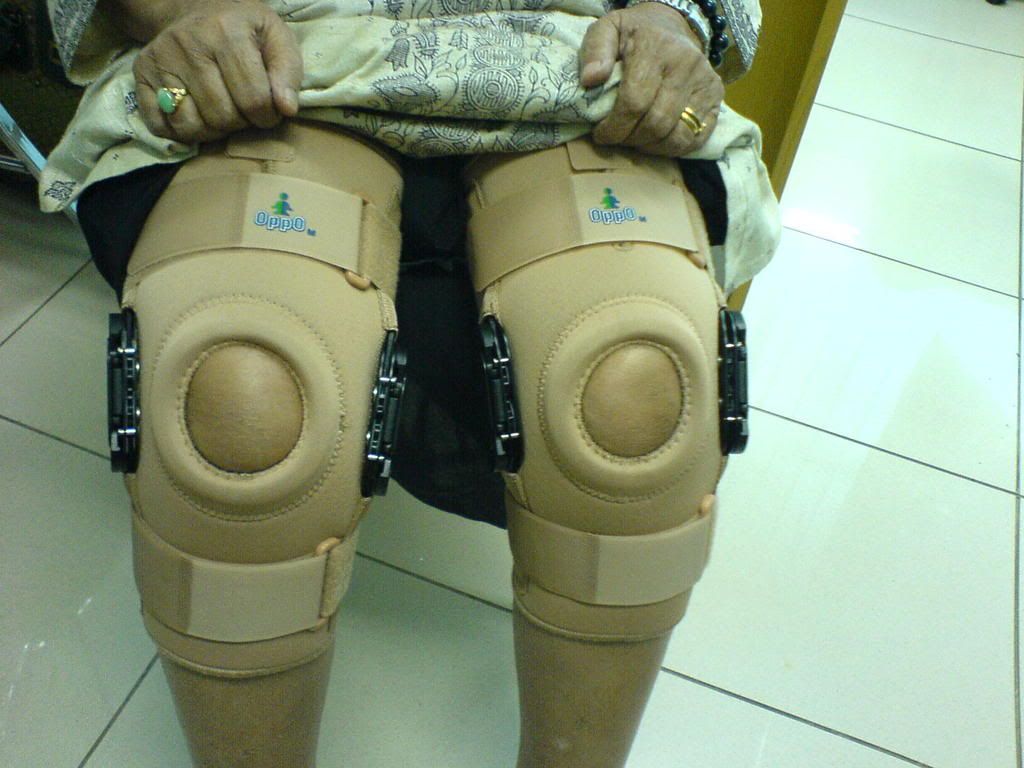
Program : Impairment: - glucosamine-chondroitine; Quadriiceps isometric exrecise


Knee support for Mrs. Emma - bilateral
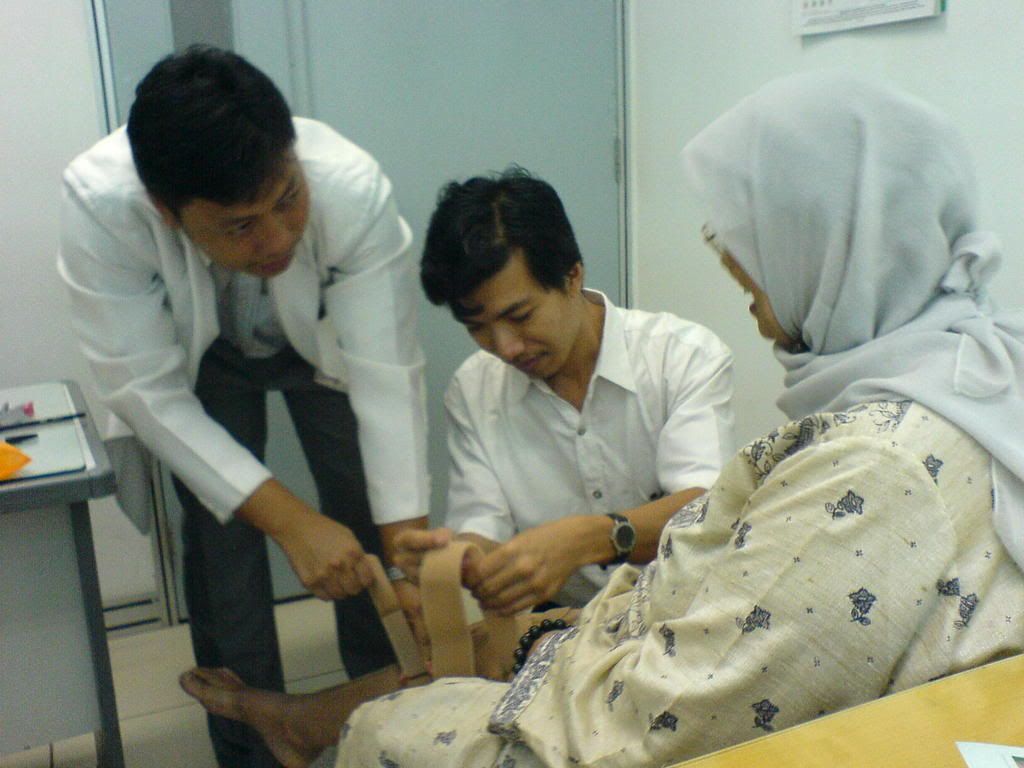


Knee support check out
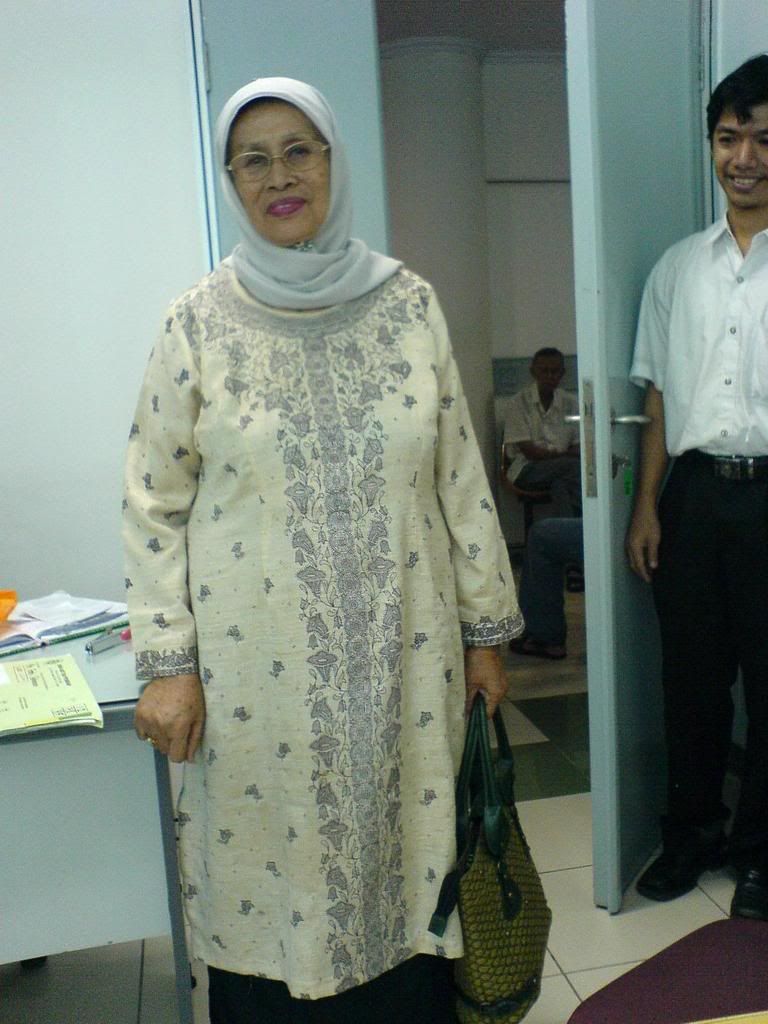


Smiling happily !!!


Tuesday, March 6, 2007

Efficacy of different therapy regimens of low-power laser in painful osteoarthritis of the knee: a double blind and randomized-controlled trial

Efficacy of different therapy regimens of low-power laser in painful osteoarthritis of the knee: a double blind and randomized-controlled trial

Gur A; Cosut A; Sarac AJ; Cevic R; Nas K; Uvar A

Physical Medicine and Rehabilitation ; School of Medicine , Dicle University, Diyarbakir , Turkey.

alig@dicle.edu.tr

BACKGROUND MEDICINE OBJECTIVES: A prospective , double blind, randomized, and controlled trial was conducted in patients with knee osteoarthritis (OA) to evaluate the efficacy of infrared low-power Gallium-Arsenide (Ga-As) laser therapy (LPLT) and compared two different laser therapy regimens.

STUDY DESIGN/ MATERIALS AND METHODS: Ninety patients were randomly assigned to three treatment groups by one of the nontreating authors by drawing 1 of 90 envelops labeled ‘A’ (Group I : actual LPLT consisted of 5 minutes, 3 J total dose +exercise ; 30 patients ), ‘B’ (Group II: actual LPLT consisted of 3 minutes , 2 J total dose + exercise ; 30 patients); and ‘C’ (Group III: placebo laser group + exercise ; 30 patients). All patients received a total of 10 treatments , and exercise therapy program was continued during study (14 weeks). Subjects, physician, and data analysis was complete. All patients were evaluated with respect teek 0o pain, degree of active knee flexion, duration of morning stiffness, painless walking distance and duration , and the Western Ontario and Mc Master University osteoarthritis Index (WOMAC) at week 0,6,1, and 14.

RESULTS: Statistically significant improvements were indicated in respect to all parameters such as pain , function, and Quality of Life (QoL), measures in the post-therapy period compared to pre-therapy in both active laser groups (p< style=""> and in parameters such as pain, and WOMAC of the Group II , were more statistically significant when compared with placebo laser group (p<>

CONCLUSIONS: Our study demonstrated that applications of LPLT in different dose and duration have not affected results and both therapy regiment were a safe and effective method in treatment of knee OA.Copyright 2003 Wiley- Liss, Inc.

PMID: 14677160 (PubMed – indexed for MEDLINE)