Wednesday, May 16, 2007


Sunday, May 13, 2007
Prevent your back
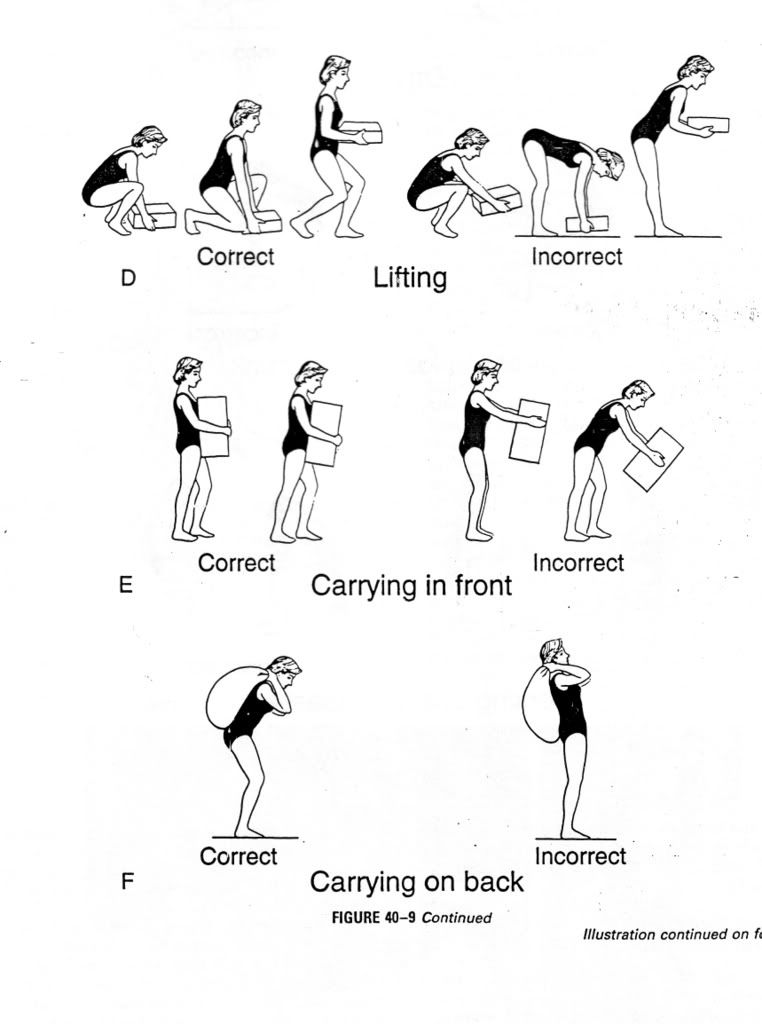
Tips for you, to prevent from Low Back Pain (LBP).
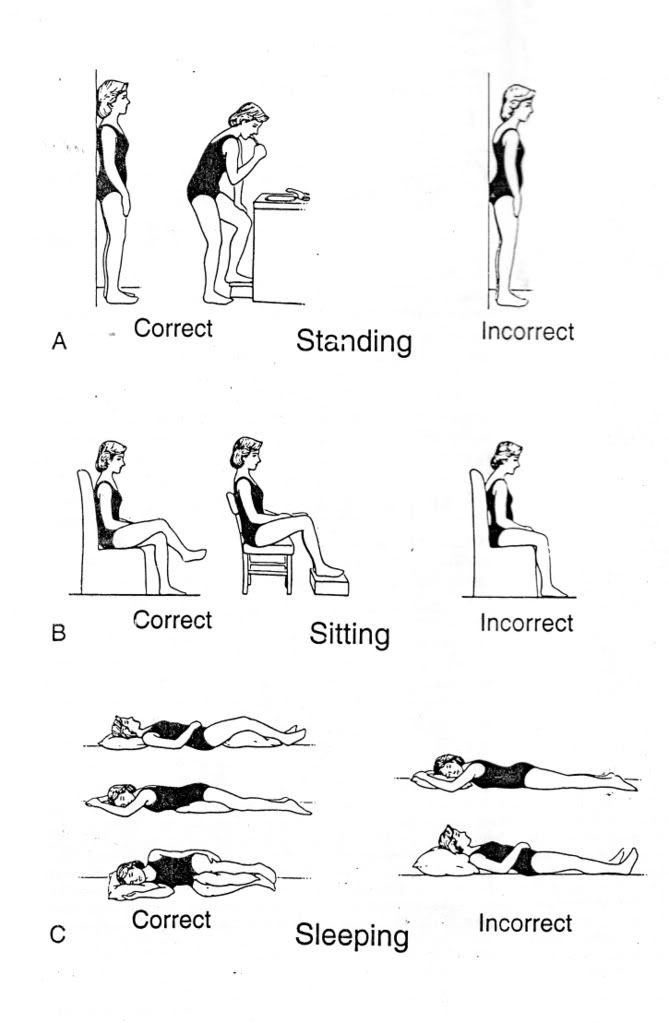
But, if you already suffer from LBP, please ask your doctor first, which suitable for you
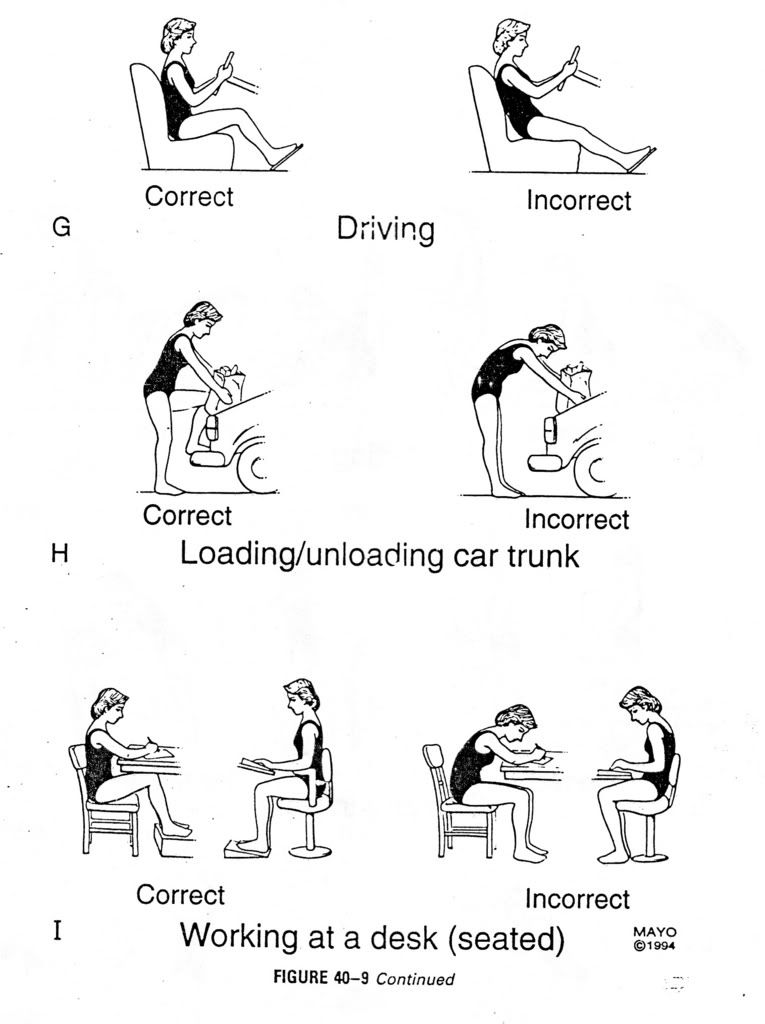
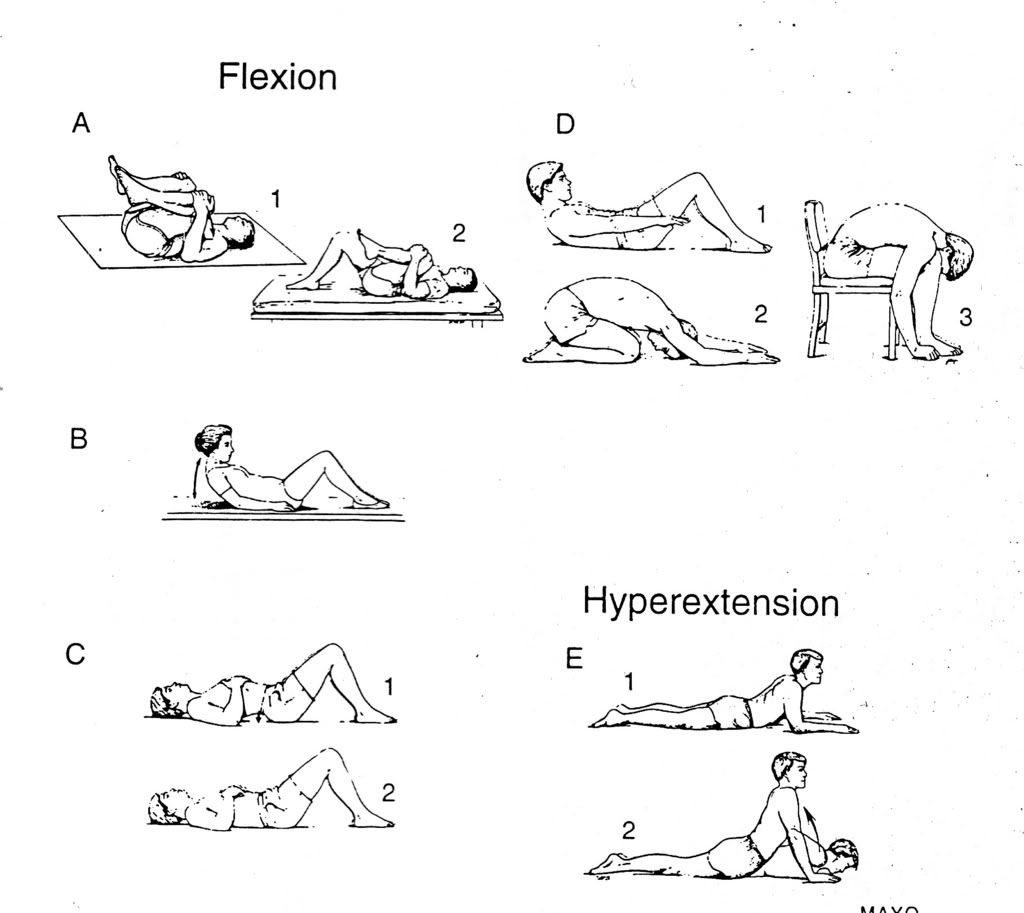
Exercise please
Saturday, May 5, 2007
De Quervein’s Diseases.
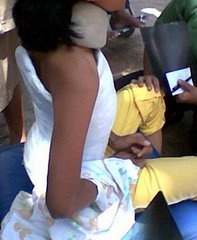
 Mrs Hizkiah, a beautiful nurse, funny, always smile.
 She fells pain, aggravated by movement on the wrist and thumb. Dear Hiskiah, it is call De Quervein’s Diseases. Characteristic symptoms can be reproduced by flexing the thumb and 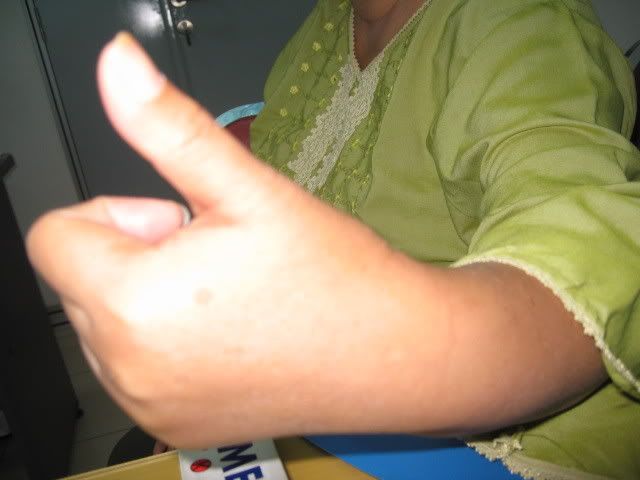 cupping it under the fingers, than flexing the wrist in an ulnar direction which streches the thumb tendons. Lovely Hizkiah, that is the reasoning, why your pain exaggerated after your therapist asked you to made a fist, forcing flex the thumb.
Pity Hizkiah, you also has another problem ., trigger thumb. In this condition your thumb snaps as it flexes and may become locked in flexion or in extension. He didn’t want to harm you, just didn’t knoe that you have another problem.
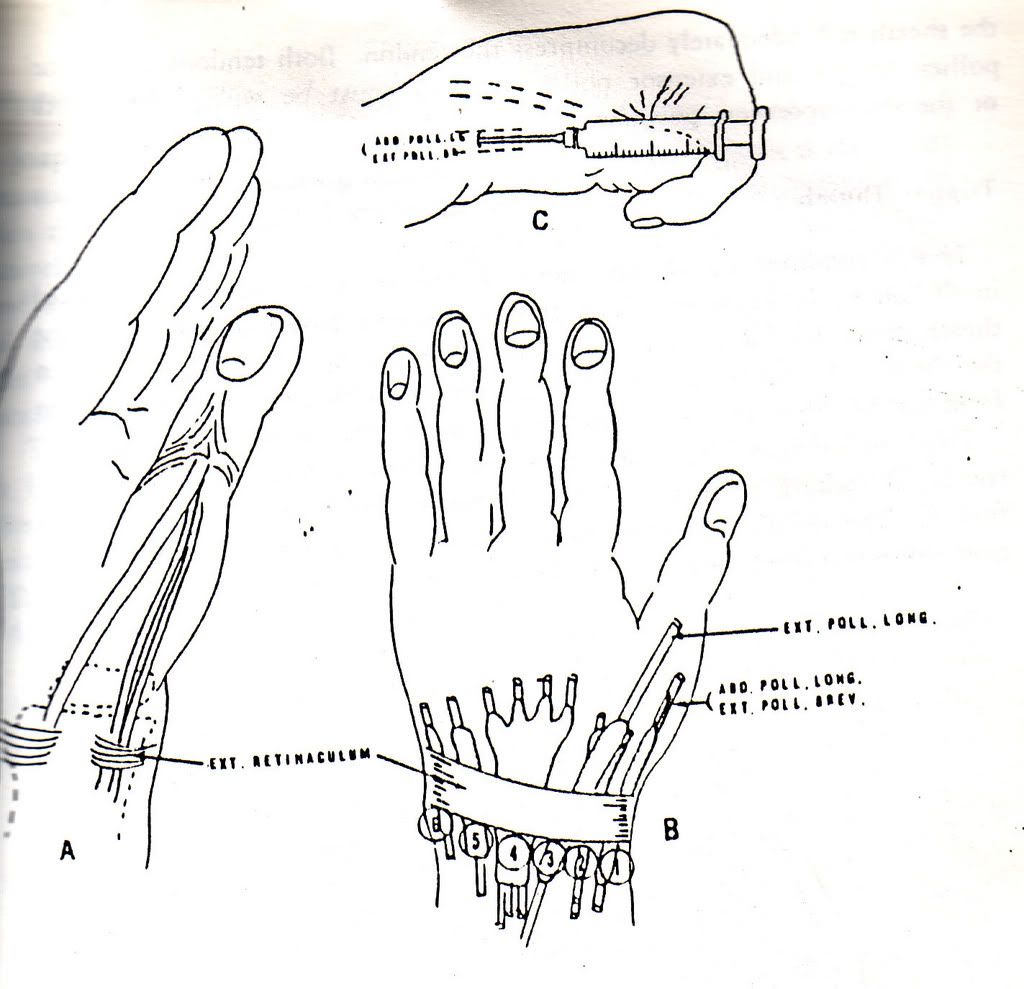
The patology De Quervein’s Diseases is an increased vascularity of the outer sheath that, coupled with edema, thickens the sheath and constricts the enclosed tendon. Treatment requires immobilization with injections of cortisone into the sheath.
My regiment for you is low level laser. Please, no heat modality, due to edema. Low level laser will not increase the temperature above body temperature. It is to reduce the pain and the edema. I am going to immobilize your thumb. But if during four weeks of treatment, there is no relief , may be our surgeon will help you.
The trigger thumb, occurs from thickening of the sheath or the tendon or both which prevents gliding of the tendon within the sheath . Local injections of cortisone into the sheath may result in good recovery . if locking persists , excision of the thickened is performed. That is not my competent. I told you, my first concern is your pain due to De Quervein’s. I use low level laser AMM50, about 830 nm, probe 50 mW, The dose 30 Youles. It is big enough. I am going to decreases the dose if your pain and edema decrease.
(Hand pain and impairment, Rene Cailliet)
De Quervein's
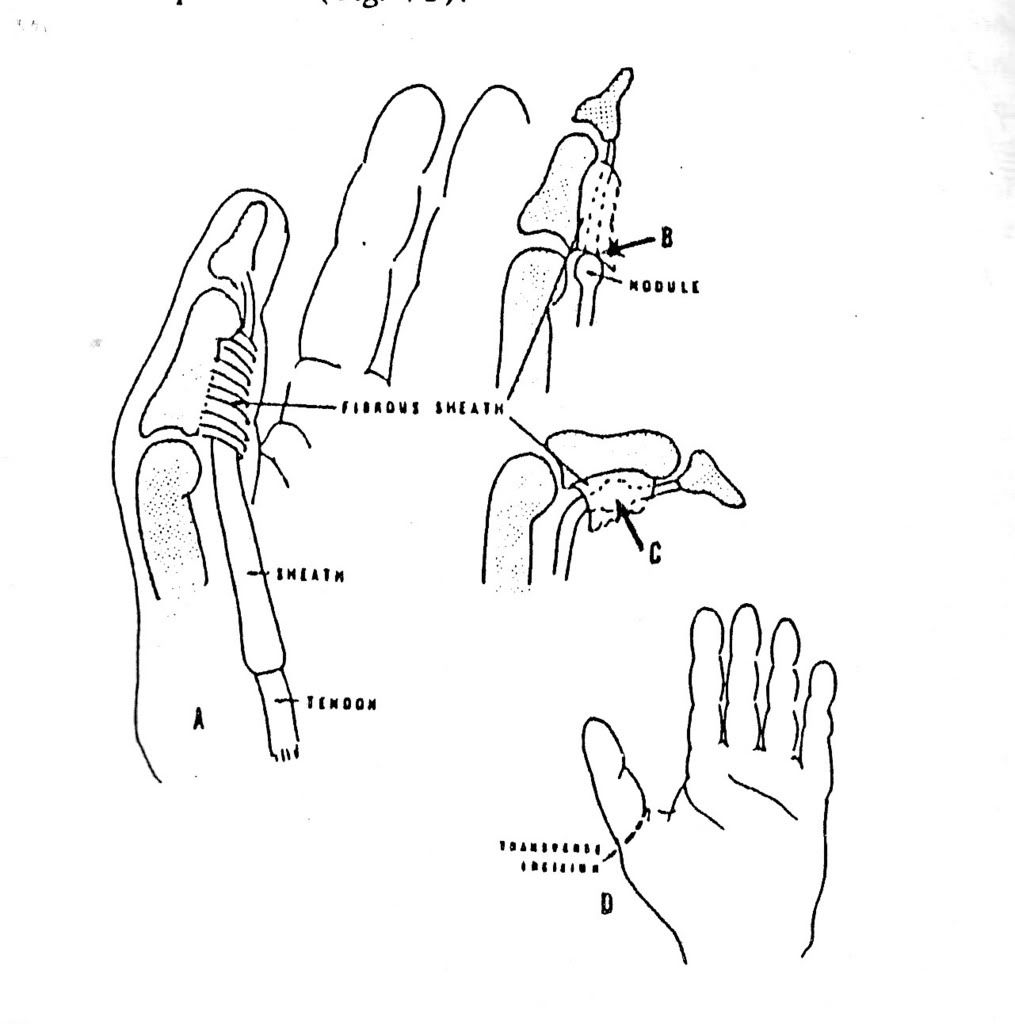
Trigger Thumb
Sunday, April 29, 2007
Cases - agenda
Going next reports for you.
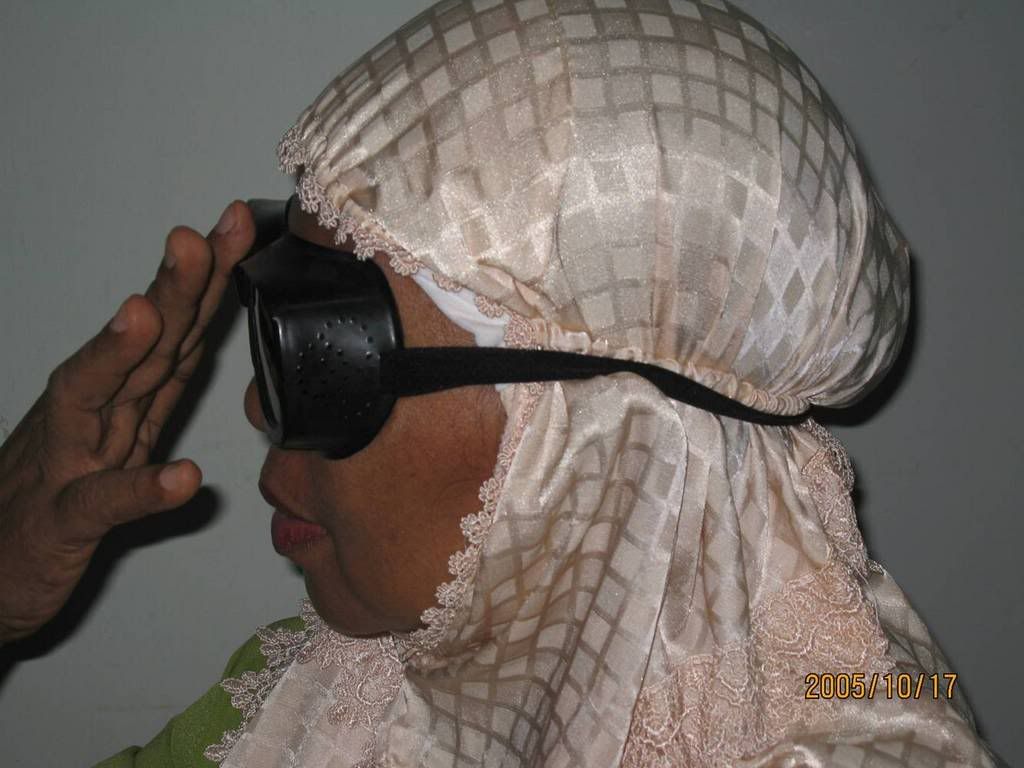
Mrs Nurati. Long case neuropathy
ILIB for stroke
LLLT for sinusitis

LLLT for dysphagis
LLLT for hipokalemi
Thursday, April 26, 2007
Low Level Laser for Hernia Nucleus Pulposes (HNP)
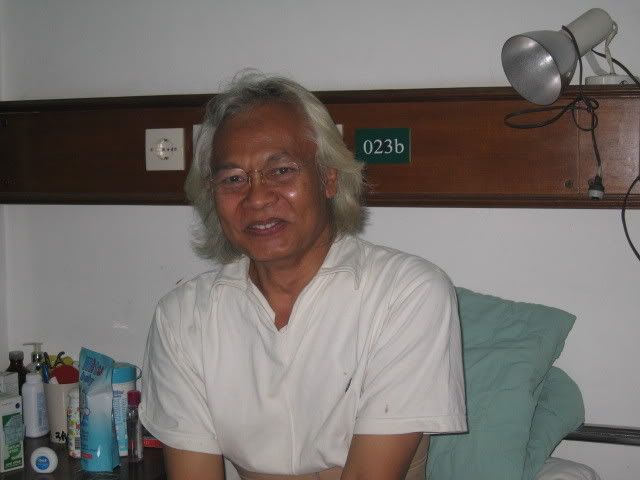
May I introduce : mr Hamid Supriyanto
He is 53 years old, father of 5 children, 2 boys and 3 girlsMr . Hamid's story:
Hospitalized due to very severe sciatic pain , after gardening.
Mr Hamid diagnose as Hernia Nucleus Pulposes (HNP) ; L 2,3,4 and 5. Refused to surgical approach.
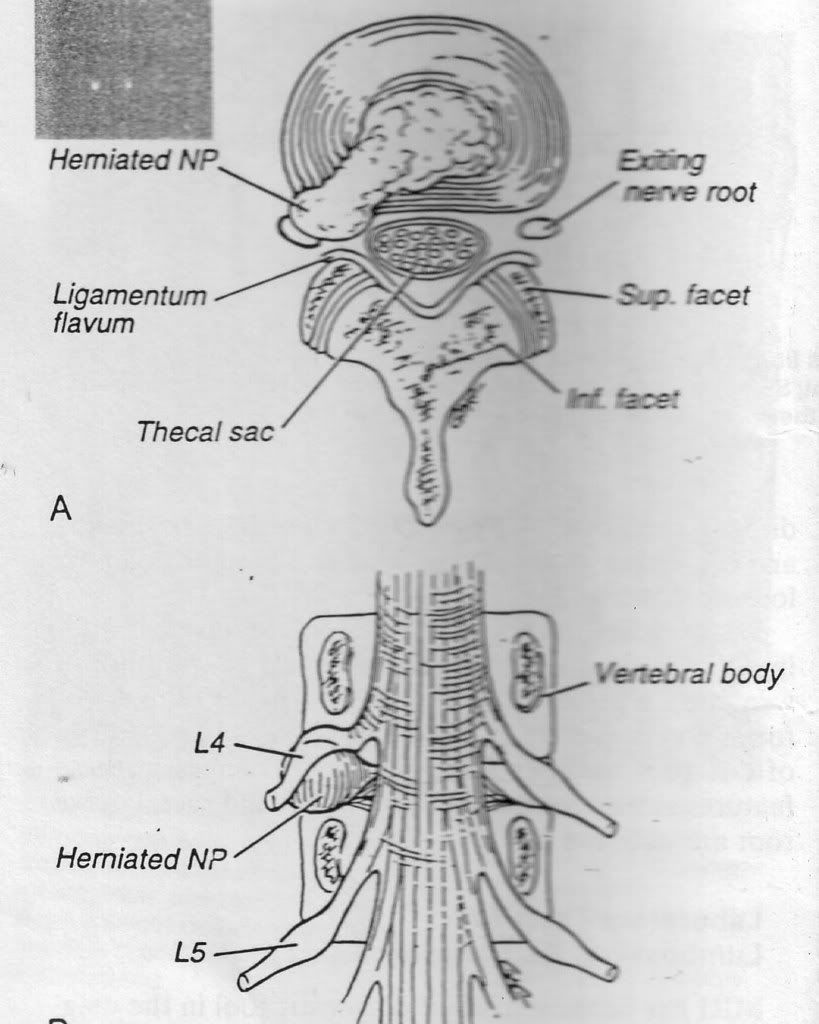
Yes, Sir. Your problem is common to middle-age man, especially after strenuous activity. You did gardening, and pulled bushes . Your roentgens shows bulging at L2. 3.4 and 5. the pain radiated to your buttock, posterior thigh , and lateral calf. It follows the path of sciatic nerve .
Therapy began with totally bed rest due to your pain (vas almost 10). Modality TENS to reduce the spasm. But after almost 3 weeks, your pain still above 6, laser is the answer. First with transcutaneus approach, 30 minutes. The pain still annoying, although you could ambulation using lumbosacral corset and cane. It was comfort for your at 1 hours therapy .
So , I decided to used ILIB, given twice a week. The pain gone after the 4th ILIB, walking freely , erect , without cane, after 5th therapy, and your daily activity full recovery. (You do gardening and riding your motorcycle).
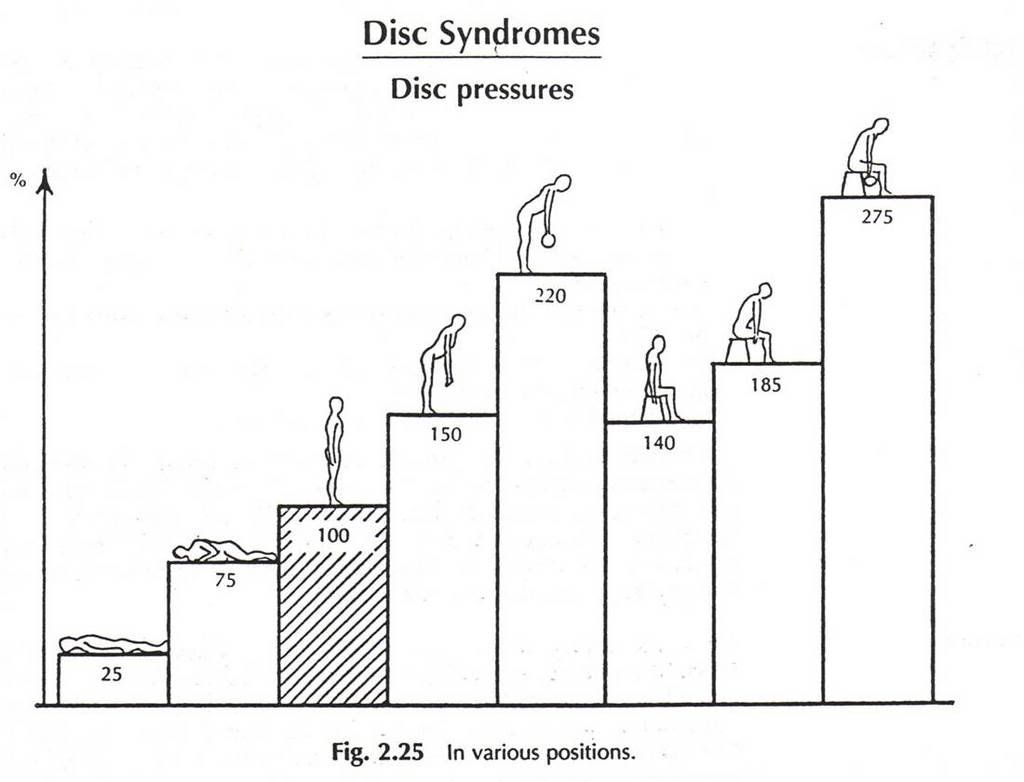
Although we are lying supine in bed, it is not free .
The load will be 100 % during upright position.
The load will be 100 % during upright position.
Discussion:
Along with laser ubi quinon , and neurotropic agent . Ubi quinon works at mitochondria as well as the laser. Neutropic agent for nerve healing conjunctions with laser.
Figure above demonstrates relative changes in L3 disk pressures in various position . Although in lying position, no weight free. In patient with HNP, lumbosacral orthose reduces or avoid weight , so no nerve impingement .
ILIB more forceful than transcutaneus. As the results, your pain reduced faster.
Subscribe to:
Comments (Atom)